
Unlike conventional automatic transmissions that shift between fixed gear ratios, a continuously variable transmission (CVT) uses a system of belts or chains and pulleys that can adjust to an infinite number of gear ratios. Think of it as having one smooth, continuous gear rather than 5, 6, or even 10 distinct gears.
Traditional automatics shift from first gear to second, second to third, and so on. Each time, this causes a momentary interruption in power delivery. A CVT, however, can instantly find the optimal ratio for any driving situation without these noticeable shifts.
How Does a CVT Transmission Work?
At the heart of a CVT are two pulleys connected by a chain or a specially designed belt, also known as the V-belt. One pulley connects to the engine, the “drive” pulley, while the other transfers power to the wheels through the driveshaft. This “driven” pulley is the secondary pulley. These pulleys can change the diameter by moving the conical halves closer together or farther apart.
When you’re accelerating from a stop, the engine-side-pulley becomes smaller while the driveshaft-side-pulley becomes larger, creating the equivalent of a low gear ratio for more torque. As you reach cruising speed, the pulleys adjust to create the equivalent of a higher gear ratio for better efficiency.
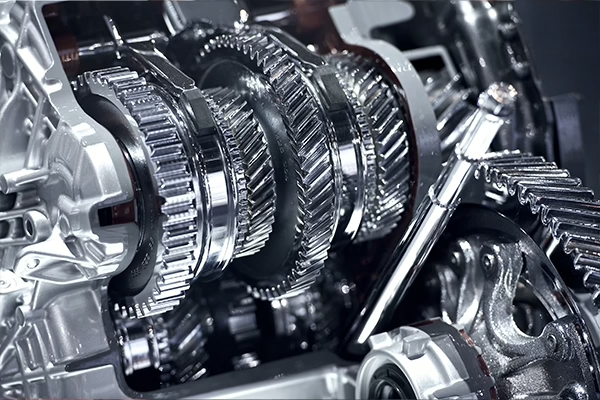
Common CVT Issues
Overheating
While the use of belts and pulleys in place of gears brings various benefits, it also introduces a significant amount of heat generated from the high clamping forces and frictional contact required to transfer power between the pulleys and belt.
Overheating can also be caused by a lack of adequate transmission fluid, leaving your CVT without proper lubrication, allowing heat to build up.
Transmission Shudder
CVTs may develop an odd shuddering or shaking feeling over time causing a concerning shudder and unusual noises, but it also indicates that the internals of your CVT are experiencing mechanical issues that could worsen and lead to irreparable damage if left untreated.
Whining/Grinding Noises
Similar to transmission shudder, CVTs may start producing grinding or whining noises. This generally occurs for similar reasons to the shuddering condition, such as a pulley surface wearing out or other mechanical failures, or worn-out bearings.
Any new noise from your transmission should always be treated with urgency, as continuing to drive could cause these issues to only get worse. In some cases, this could even lead to complete transmission failure.
Jerking Acceleration
When CVTs are low on fluid, they may cause the vehicle to jerk forward during acceleration as the transmission loses hydraulic pressure due to poor fluid condition.
It should be noted that slight hesitation can be normal at low speeds with a CVT, but an excessively jerking transmission is likely a sign of a larger issue.
Keeping your CVT running with the correct transmission fluid is vital to maintaining your transmission and preventing mechanical issues like these from affecting your drive or damaging your drivetrain.
Importance of CVT Maintenance
One of the key differences between a CVT and a traditional automatic is the shorter service intervals. CVTs rely on the condition of their belts, pulleys, and fluid. These parts are under constant stress, causing quicker wear. Routine fluid changes are key to the transmission’s integrity. They ensure the belts and pulleys work smoothly. If you’re in need of a fluid flush, the CVT experts at Sun Automotive can provide high-quality service for your CVT Transmission.
Benefits of a CVT Transmission
Increased Fuel Efficiency
A primary reason vehicle manufacturers moved to CVT transmissions is the improved fuel economy they provide. The CVT transmission has the ability to maintain the engine at an optimal RPM, regardless of vehicle speed, which provides improved fuel economy over a traditional automatic transmission.
Reduced Emissions
Similar benefits from improved fuel efficiency also translate to reduced vehicle emissions. The ability to keep an engine running at its ideal operating RPM range allows for fewer emissions from the exhaust.
Reduced Manufacturing Cost
Due to the fewer parts and smaller size, CVTs are less expensive to manufacture. This lower cost reduces the overall cost of a new vehicle.
Driving Comfort
Another noticeable benefit while driving a CVT-equipped vehicle is the smooth driving experience. Without traditional gear shifts, the acceleration feels smooth and free from any jolting shifts.
Transmission Service & Repair in
Here at Sun Automotive, our expert technicians have the expertise and experience to service your transmission properly. Whether it’s a fluid flush or a more in-depth repair, we’ll have your vehicle shifting like new. We have four convenient locations to service you in Eugene, Springfield, and Junction City. Give us a call or schedule online with us today!