
Most drivers are aware how vital oil is for their vehicle, as it’s the lubricant that allows all the moving metal components with tight tolerances to operate smoothly. Without it, the various engine components wouldn’t be able to handle the buildup of friction and heat within the motor.
So when you begin to notice a burning smell from your engine, it’s understandably worrying as you know your vehicle may be losing a crucial fluid for lubrication and cooling. Read on to hear the common signs of oil burn every driver should know, the most frequent causes of this issue to keep an eye out for, and what to do if you notice these symptoms in your own vehicle.
Signs of Burning Oil
- Distinct burning smell from engine bay or exhaust
- Blueish-grey smoke from exhaust pipe
- Heavy soot buildup on tailpipe
- Frequent low-oil volume without visible puddles under the vehicle
- Engine misfires and rough idle
- Active oil pressure warning light on dashboard
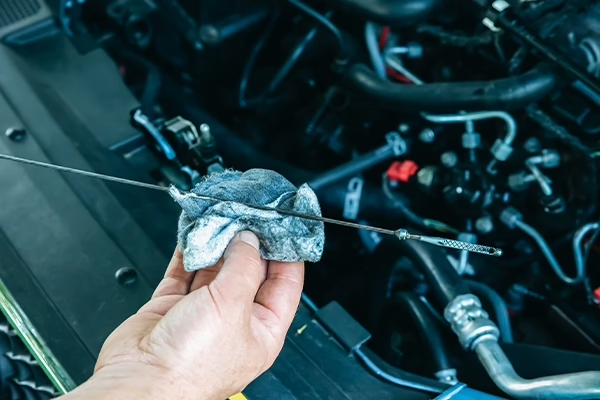
What Does Burning Oil Mean?
When a leak allows oil to exit the system either externally onto hot engine components or internally within the combustion chamber, it burns away rapidly as a result of the extreme temperatures in or around the engine. Over time this leads to excessive oil consumption, and can leave your engine without the lubrication it needs to function safely.
Internal leaks can often signal a major problem within your motor. This happens when there’s a failed seal within the engine that allows oil to leak into the combustion chamber and is subsequently ignited and burned off with the rest of the fuel. Worn valve seals, piston rings, or other internal failures are often to blame for this.
If you suspect an internal leak in your engine it’s important to avoid driving the vehicle have it inspected by a trusted professional, as driving with internal oil leakage can result in complete catalytic converter failure, fouled spark plugs, and misfires within the motor.
External leaks are typically less severe in terms of how quickly they can cause issues within your engine, however it’s still vital to have the leak diagnosed and repaired as soon as possible. Allowing oil leaks to linger can lead to rapid oil loss and eventual damage if not topped-off regularly to a safe amount.
What Are The Common Causes of Oil Burn?
Head Gasket Leak
The head gasket is responsible sealing the cylinder head to the engine block, keeping oil and coolant separated from each other. When this gasket fails and allows the two fluids to mix, or for oil to enter the cylinders, it can result in a host of issues within your engine and cooling system.
Head gasket issues should be taken seriously, as allowing them to linger can lead to misfires in the engine, rapid oil and coolant loss, and various other problems with the potential for irreparable engine damage.
Leaking Turbo Seals
In turbocharged vehicles, turbo seals are a common culprit of oil burning. When these seals fail, oil is able to make its way into the engine and will be burned. Depending on the location of the leak, this can cause oil to either be pushed into the engine from the intake side of the turbo, while on the other side, oil will be pushed into the hot exhaust system and subsequently burned.
Damaged Valve or Piston Seals
Your valve seals keep oil out of the combustion chamber, but as they degrade and fail over time, oil can be introduced into the cylinder and cause the internal burning of oil. Oil in the combustion chambers may also lead to fouled spark plugs, which refers to a spark plug that has become contaminated with oil and is no longer able to create the spark needed to ignite the fuel mix.
Similar to valve seals, piston rings are also vital for keeping oil from entering the wrong portions of your engine, resulting in similar symptoms when they fail.
As we discussed above, a misfiring cylinder can quickly lead to expensive damage to your catalytic converter and powertrain. If you notice a flashing check engine light, or other signs of internal leakage, have your vehicle inspected immediately.
External Oil Leak Causing a Burning Smell
External leaks happen when oil is leaking to the outside of the engine. This often causes dripping onto hot engine components and the oil is burned off, causing a recognizable burning oil smell. External leaks may be visible even when burning off due to the residue they leave on engine components.
Oftentimes external leaks are less serious, but can still cause oil starvation and other problems if left unresolved. In many cases, continually topping-off your oil to keep up with consumption will quickly become more costly than just having the leak diagnosed and repaired.
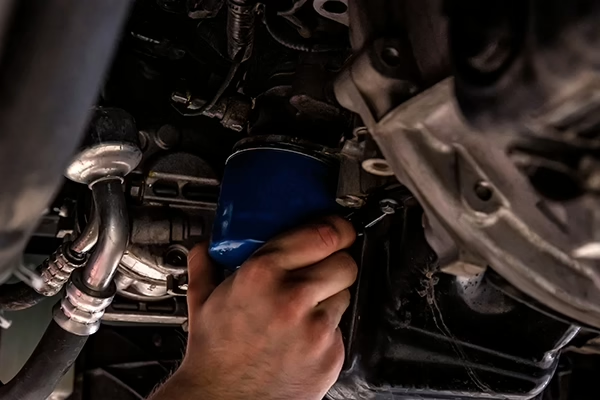
Incorrectly Installed or Damaged Oil Filter
Your vehicle’s oil filter keeps your oiling system loop and motor free of debris. However, when this part is either damaged or not installed properly, it can leak oil from around the edges, often right onto the hot engine block or other components.
Luckily, this issue can be easily remedied, as oil filters are generally cheap and easy to install.
My Car is Burning Oil! What Should I Do?
If you’re experiencing any loss of oil, internal or otherwise, you should avoid driving the vehicle and have it inspected and repaired by a trusted professional. Running without the proper level of oil can cause irreversible engine damage, overheating, and various catastrophic failures of certain components.
Whether your leak is external or internal, oil is such a vital part of keeping your engine safe that it’s almost never worth it to gamble rather than just having the leak repaired.
Oil Leak Diagnostics and Repair at Sun Automotive
If you notice the smell of burning oil, don’t hesitate to reach out to the experienced team at Sun Automotive. We have four locations across Eugene, Junction City, and Springfield in Oregon; all equipped with the equipment needed to pinpoint the source of your oil loss and provide you with the quality of repair your vehicle deserves.
Give us a call today or schedule online to secure your appointment with the premier vehicle care and repair facility across Eugene, Junction City, and Springfield, Oregon